

A professional brake inspection is a systematic evaluation of your vehicle's braking system to ensure safety and performance. Technicians examine pads, rotors, calipers, and fluid to identify wear or damage. At Ace Auto Repair & Tire Pros in San Ramon, this process prioritizes transparency and clear communication. You will receive a detailed report explaining the condition of each component and any necessary repairs.
The Initial Visual Assessment
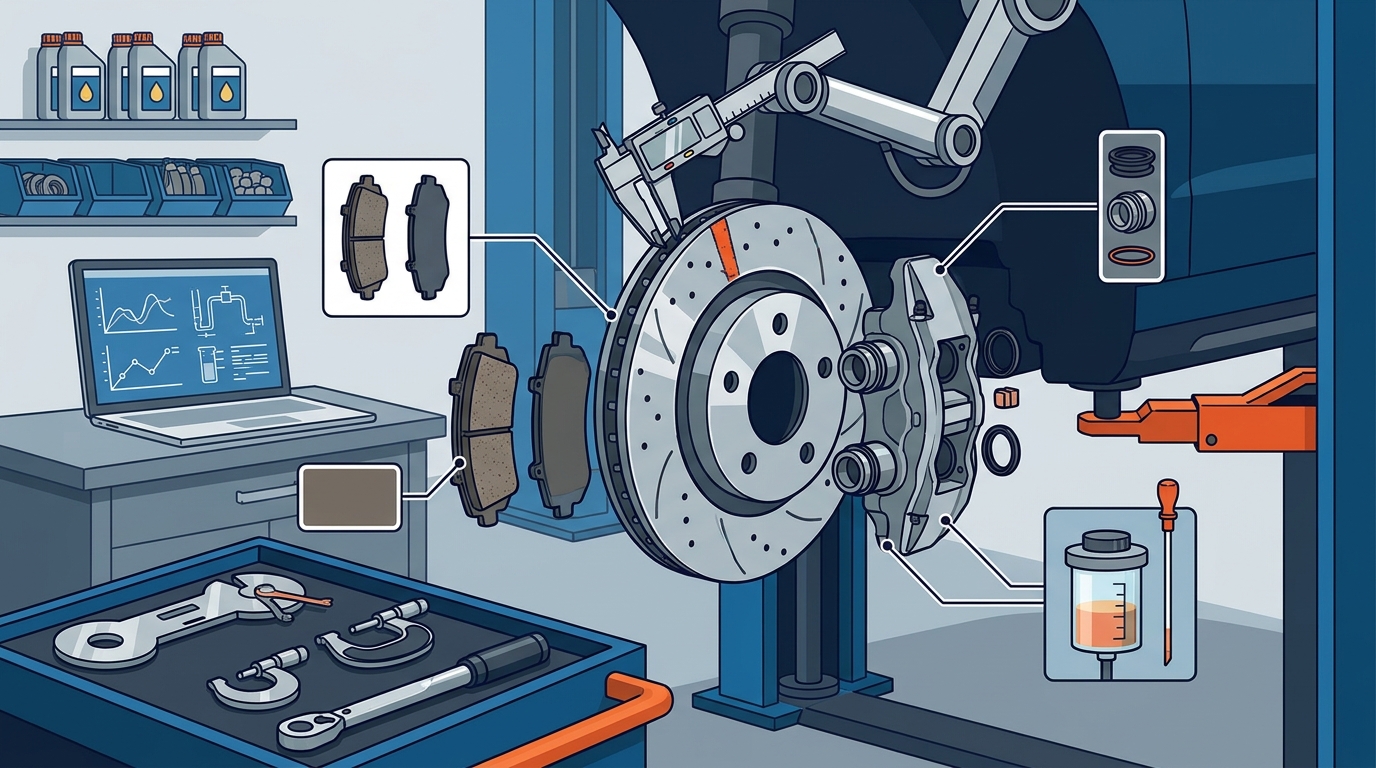
The inspection begins with a visual check of the brake components. Technicians remove the wheels to inspect the rotors and pads directly. They look for signs of uneven wear, scoring, or cracking on the rotor surface. This step helps identify immediate safety hazards before the vehicle is driven further.
Measuring Pad Thickness
Brake pad thickness is a critical metric in any inspection. Technicians use a gauge to measure the remaining friction material. A standard new pad is often around 12 millimeters thick. When the material drops below 3 millimeters, replacement is typically recommended. This measurement provides an objective baseline for your vehicle's braking health.
Evaluating Rotor Condition and Thickness
Checking for Warping
Warping is a common issue that causes steering wheel vibration during braking. Technicians use a dial indicator to measure the runout of the rotor. Even a slight deviation can affect the smoothness of your stop. Identifying warping early prevents damage to the new brake pads you might install.
Inspecting Calipers and Hardware
Calipers are the mechanisms that apply pressure to the brake pads. During the inspection, technicians check for sticking pistons or leaking seals. They also inspect the caliper slide pins and hardware for corrosion. Sticking calipers can cause one pad to wear faster than the other. Proper lubrication and hardware replacement ensure the caliper moves freely and evenly.
Fluid Analysis and System Integrity
Brake fluid is a hydraulic medium that transfers force from the pedal to the calipers. Over time, fluid absorbs moisture from the air, which lowers its boiling point. A professional inspection includes checking the fluid level and condition. Dark or cloudy fluid indicates contamination and the need for a flush. Maintaining clean fluid is essential for consistent braking performance and preventing internal corrosion.
Testing the Brake Pedal
Technicians often perform a static test of the brake pedal. They press the pedal to check for a spongy feel or excessive travel. A firm pedal indicates a healthy hydraulic system. If the pedal feels soft, it may signal air in the lines or a leak. This quick test helps diagnose issues that are not visible during the physical component inspection.
Reviewing the Findings and Recommendations
After the physical inspection, the technician reviews the findings with you. They explain the condition of each component in plain language. You will receive a clear recommendation on what needs immediate attention and what can wait. This transparency helps you make informed decisions about your vehicle's maintenance. At Ace Auto Repair & Tire Pros, we believe in educating our customers rather than pressuring them into unnecessary repairs.
Understanding the Cost Implications
Knowing the condition of your brakes helps you budget for repairs. Replacing pads is generally less expensive than replacing rotors or calipers. Addressing minor issues early can prevent more costly damage later. Your inspection report will outline the estimated costs for any recommended services. This allows you to plan your maintenance schedule effectively.
Key Takeaways
- A professional brake inspection is a detailed check of pads, rotors, calipers, and fluid to ensure safety.
- Technicians measure pad thickness and rotor depth to determine if components are within safe limits.
- Visual checks for warping and corrosion help identify issues that affect braking performance.
- Brake fluid condition is assessed to ensure the hydraulic system functions correctly.
- You will receive a clear report explaining the condition of your brakes and any needed repairs.
- Regular inspections help prevent costly damage and ensure reliable stopping power.
Frequently Asked Questions
How often should I get a brake inspection?
It is recommended to have your brakes inspected at least once a year or every 10,000 to 12,000 miles. More frequent checks are advisable if you drive in stop-and-go traffic or mountainous areas.
What are the signs that my brakes need immediate attention?
Common signs include squealing or grinding noises, a spongy brake pedal, or a pulling sensation when braking. If you notice any of these, schedule an inspection immediately.
Do I need to replace all four brake pads at once?
It is generally recommended to replace brake pads in pairs, either front or rear. Replacing only one side can lead to uneven braking and handling issues.
How long does a brake inspection take?
A standard brake inspection typically takes 15 to 30 minutes. If repairs are needed, the time will vary depending on the complexity of the work.
Can I drive my car if the brakes are worn?
Driving with severely worn brakes is unsafe and can lead to a loss of control. If your inspection reveals critical wear, do not drive the vehicle until it is repaired.
What is the difference between brake pads and rotors?
Brake pads are the friction material that clamps against the rotors. Rotors are the metal discs that the pads press against. Both components wear over time and may need replacement.
Conclusion
Understanding the brake inspection process helps you feel confident in your vehicle's safety. By knowing what to expect, you can engage in meaningful conversations with your technician. Ace Auto Repair & Tire Pros is committed to providing honest, thorough, and educational service. Schedule your next brake inspection today to ensure your vehicle is ready for the road ahead.