

Before buying new tires, verify the exact size, load index, and speed rating match your vehicle's specifications. Confirm the tread depth, warranty terms, and installation costs. This guide covers how to choose, verify, and time your tire purchase at Ace Auto Repair & Tire Pros in San Ramon, CA.
How to Choose: Separating Good from Bad
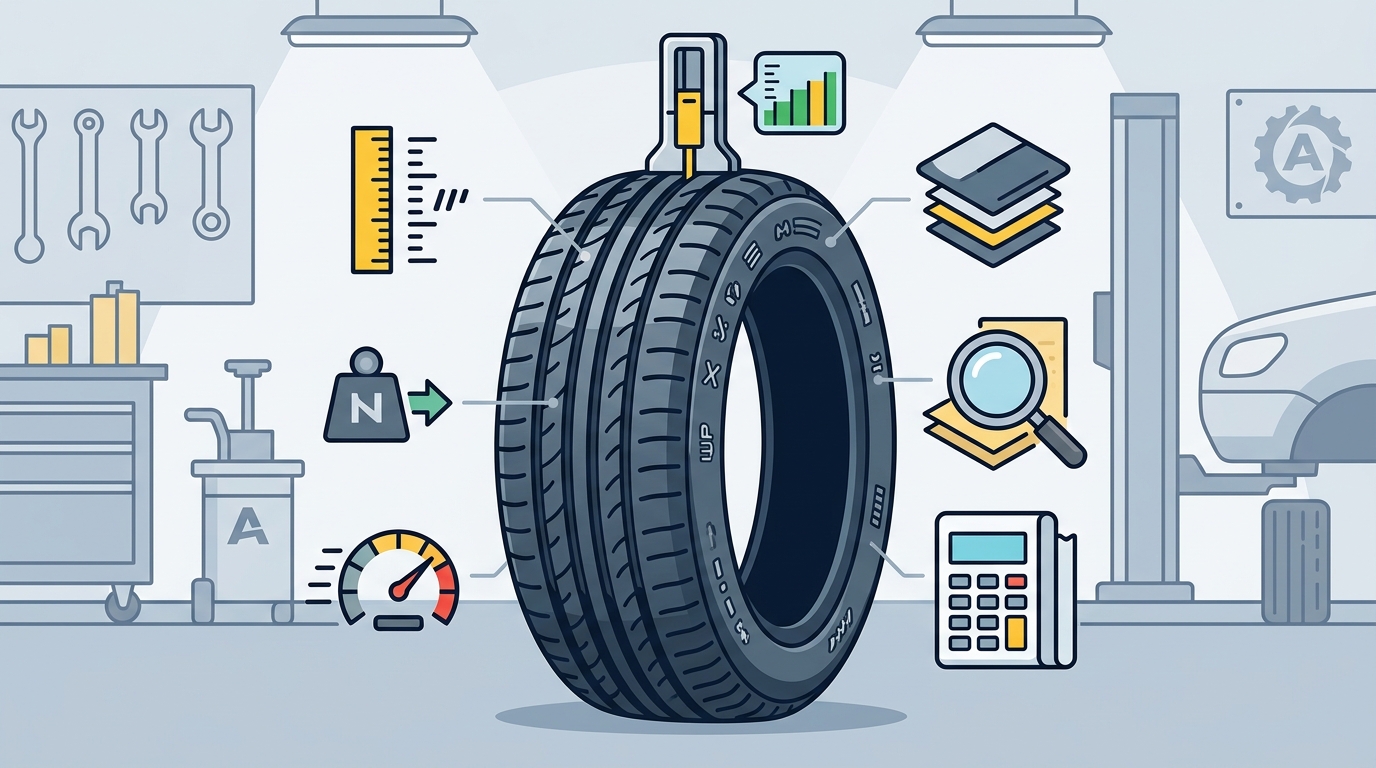
Choosing the right tire requires matching the tire's physical dimensions to your vehicle's requirements. A tire size is the specific measurement of the tire's width, aspect ratio, and rim diameter. For example, a 225/45R17 tire has a width of 225 millimeters, an aspect ratio of 45 percent, and fits a 17-inch rim. Mismatching these dimensions can cause speedometer inaccuracies and clearance issues.
Load index and speed rating are critical safety metrics. The load index is a numerical code that indicates the maximum weight a tire can support. The speed rating is a letter code that indicates the maximum speed at which the tire can safely operate. Always select a tire with a load index and speed rating equal to or higher than the original equipment manufacturer (OEM) specifications found on your driver's side door jamb.
Performance Categories
Tires are categorized by their intended use. All-season tires provide a balance of wet and dry traction. Winter tires use softer rubber compounds that remain flexible in freezing temperatures. Performance tires prioritize cornering grip and handling response. Selecting the wrong category for your climate or driving style reduces safety and increases wear.
What to Ask: Specific Questions Before Committing
When consulting with a service provider, ask specific questions to ensure transparency. Inquire about the total installed price, including taxes, disposal fees, and balancing. Ask if the quote includes a wheel alignment. Ask about the warranty coverage for both the tire and the labor. These questions prevent unexpected costs at the register.
Ask about the tire's treadwear rating. The treadwear rating is a three-digit number that compares the tire's expected lifespan to a reference tire. A higher number generally indicates a longer-lasting tire, though this is not a guarantee of absolute mileage. Ask the technician to explain the specific benefits of the brand and model you are considering.
How to Verify: Checking Claims and Credentials
Verify the authenticity of the tires before installation. Check the DOT code on the tire sidewall. The DOT code is a series of numbers and letters that identifies the manufacturer, plant, and production date. The last four digits represent the week and year of manufacture. Tires older than five to six years may have degraded rubber, even if they have unused tread.
Verify the shop's credentials. Check for ASE certification among the technicians. Review online ratings and read recent customer feedback. At Ace Auto Repair & Tire Pros, our team uses modern diagnostic equipment to ensure proper fitment. You can review our customer reviews to see how we handle service interactions.
How It Works: The Process and Timeline
The tire replacement process follows a standard sequence. First, the technician removes the old tires and inspects the wheels for damage. Next, they mount the new tires and balance them. Finally, they install the tires and perform a final torque check. This process typically takes 45 to 90 minutes for a standard set of four tires.
If you require a wheel alignment, the process takes longer. A wheel alignment is the adjustment of the suspension angles to meet the manufacturer's specifications. This service ensures even tire wear and straight tracking. You can schedule an appointment to ensure the shop has the necessary time to complete all services in one visit.
What It Costs: Price Drivers
Financing options can affect the total cost. Some shops offer promotional financing through credit card partners. Check for interest-free periods or low APR offers. At Ace Auto Repair & Tire Pros, we offer financing options to help manage the cost of major repairs and tire purchases.
What Goes Wrong: Common Mistakes
One common mistake is ignoring the speed rating. Installing a tire with a lower speed rating than the OEM specification can be dangerous at highway speeds. Another mistake is mixing tire brands or models on the same axle. This can cause uneven wear and handling instability. Always replace tires in pairs or sets of four to maintain consistent traction.
Overlooking the warranty terms is another error. Read the fine print regarding prorated coverage and road hazard protection. Some warranties exclude damage caused by improper inflation or road hazards. Understanding these exclusions helps you maintain the tire correctly to keep the warranty valid.
Versus Alternatives: New vs. Used vs. Remanufactured
New tires offer the best warranty and full tread depth. Used tires are cheaper but carry risks of hidden damage and unknown age. Remanufactured tires are rebuilt with new tread and offer a middle ground in price and performance. For most drivers, new tires provide the best value over time due to safety and warranty coverage.
| Option | Pros | Cons |
|---|---|---|
| New Tires | Full warranty, best safety, consistent quality | Highest upfront cost |
| Used Tires | Lowest cost | No warranty, unknown age, potential damage |
| Remanufactured | Lower cost than new, decent warranty | May wear faster than premium new tires |
For a Specific Situation: EVs and Heavy Loads
Electric vehicles (EVs) have specific tire needs. EVs are heavier than comparable gas vehicles due to battery weight. They also produce instant torque, which can accelerate tire wear. Choose tires with a higher load index and a lower rolling resistance rating to maximize range. At Ace Auto Repair & Tire Pros, we offer electric vehicle repair and maintenance services to support these specific needs.
Drivers who frequently tow or haul heavy loads need tires with a higher load range. Look for tires marked as Load Range C or D. These tires have more plies in the sidewall, providing greater strength. Standard passenger tires may fail under sustained heavy loads.
Rules and Protections: Warranties and Laws
Tire warranties are legal contracts between the manufacturer and the buyer. Most warranties cover defects in materials and workmanship. They typically do not cover damage from road hazards, improper inflation, or misuse. Keep your receipt and warranty card in a safe place. If a tire fails under warranty, the manufacturer will replace or repair it according to the terms.
Consumer protection laws vary by state. In California, you have the right to a refund or replacement if a product is defective. Check the shop's return policy for unused tires. Some shops allow returns within a specific number of days if the tires have minimal wear.
Local Specifics: San Ramon, CA
San Ramon, CA, experiences a Mediterranean climate with hot, dry summers and mild, wet winters. All-season tires are suitable for most drivers in this region. However, drivers who travel to higher elevations in the Sierra Nevada mountains may need winter tires for snow and ice. The local road conditions include smooth highways and some rougher surface streets, which can affect tire wear.
At Ace Auto Repair & Tire Pros, located at 2560 San Ramon Valley Blvd, we understand the local driving conditions. We stock tire brands that perform well in the Bay Area climate. You can browse our tire brands to find options suited for local roads.
Timing: When to Act
Timing your tire purchase can save money. Manufacturers often run promotions in the spring and fall. These promotions may include discounts or free services like wheel alignment. Check for seasonal sales before buying. Avoid buying tires in extreme heat or cold if possible, as this can affect the installation process.
Replace tires when the tread depth reaches 4/32 of an inch. This is the legal minimum in many states, but it is also the point where wet weather traction significantly decreases. Use a tread depth gauge to measure your tires. If the tread is worn down to the wear bars, replace the tires immediately.
Results Over Time: Long-Term Outcomes
Properly maintained tires last between 40,000 and 60,000 miles. Regular tire rotations every 5,000 to 7,500 miles ensure even wear. This extends the life of the tires and improves fuel efficiency. Under-inflation is a major cause of premature wear. Check your tire pressure monthly and before long trips.
Investing in quality tires and proper maintenance leads to better long-term results. You will experience smoother rides, better handling, and lower fuel costs. At Ace Auto Repair & Tire Pros, we provide tire care tips to help you maximize the life of your investment.
Key Takeaways
- Match the tire size, load index, and speed rating to your vehicle's OEM specifications.
- Verify the DOT code to ensure the tires are new and not aged.
- Ask for a total installed price that includes taxes, balancing, and disposal fees.
- Replace tires in pairs or sets of four to maintain consistent traction.
- Choose tires with a higher load index if you drive an EV or tow heavy loads.
- Rotate tires every 5,000 to 7,500 miles to extend their life.
- Check tire pressure monthly to prevent premature wear and improve fuel efficiency.
- Review the warranty terms to understand what is covered and what is excluded.
Frequently Asked Questions
How often should I rotate my tires?
Rotate your tires every 5,000 to 7,500 miles. Check your owner's manual for the specific recommendation for your vehicle. Regular rotation ensures even wear and extends the life of the tires.
What is the DOT code on a tire?
The DOT code is a series of numbers and letters that identifies the manufacturer, plant, and production date. The last four digits represent the week and year of manufacture.
Can I mix different tire brands on the same axle?
No, you should not mix different tire brands or models on the same axle. This can cause uneven wear and handling instability. Always use the same brand and model on the same axle.
How do I know if my tires are worn out?
Check the tread depth. If the tread depth is 4/32 of an inch or less, the tires are worn out. You can use a tread depth gauge or a quarter to measure the tread depth.
Do electric vehicles need special tires?
Yes, electric vehicles are heavier and produce instant torque. Choose tires with a higher load index and lower rolling resistance to maximize range and handle the extra weight.
What is the best time to buy tires?
The best time to buy tires is during seasonal promotions in the spring and fall. Manufacturers often offer discounts and free services during these periods.
How long do tires last?
Tires typically last between 40,000 and 60,000 miles. The actual lifespan depends on driving conditions, maintenance, and tire quality.
Where can I buy tires in San Ramon?
You can buy tires at Ace Auto Repair & Tire Pros in San Ramon, CA. We offer a wide range of tire brands and models, along with professional installation and balancing services.