

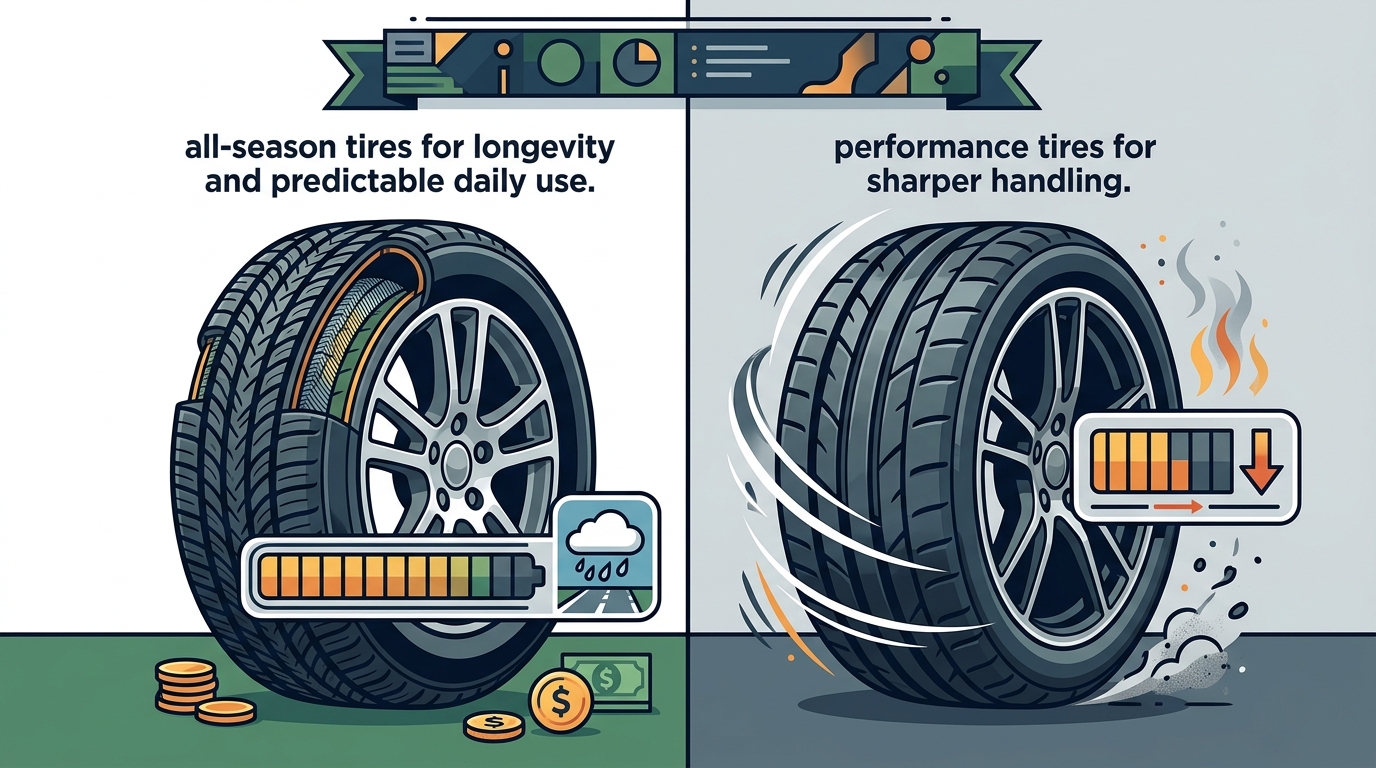
For most daily drivers, all-season tires are the better choice because they offer superior longevity, predictable wet-weather safety, and lower replacement costs. Performance tires provide sharper handling and higher cornering speeds but wear out faster and offer less tread life. This guide covers how to choose, verify claims, understand costs, and select the right tire for your specific driving conditions in San Ramon, California.
How to Choose: Separating Good from Bad
Choosing between all-season and performance tires requires understanding the fundamental trade-off between durability and dynamic capability. All-season tires are designed to provide a balanced package of wet and dry traction, ride comfort, and tread life across a wide range of temperatures. Performance tires are engineered with softer rubber compounds and stiffer sidewalls to maximize grip and steering response, often at the expense of longevity. A good choice aligns with your primary driving habits. If you drive 15,000 miles a year on highways and local roads, an all-season tire is the logical default. If you drive on winding canyon roads and prioritize cornering speed over tread life, a performance tire may be the better fit. Avoid tires that do not match your vehicle's load index or speed rating, as this can compromise safety and void warranties.
What to Ask Before Committing
Before purchasing, you should ask specific questions to ensure the tire meets your needs. First, ask about the treadwear rating. This number indicates the relative wear rate of the tire compared to a standard reference tire. A higher number generally means longer life. Second, ask about the warranty coverage. Does the manufacturer offer a limited warranty against defects, and what are the exclusions? Third, ask about the noise level. Performance tires can be louder at highway speeds due to their aggressive tread patterns. Finally, ask about the specific compound. Some performance tires use silica-based compounds that improve wet grip, which is crucial for daily driving in variable weather.
How to Verify Claims and Credentials
How the Process Works
The process of replacing tires involves several steps that ensure safety and performance. First, the technician removes the old tires and inspects the wheels for damage. Next, the new tires are mounted and balanced. Wheel balancing is critical because it ensures the weight of the tire and wheel assembly is evenly distributed. An unbalanced wheel causes vibration, which can damage suspension components and wear tires unevenly. After mounting, the tires are installed on the vehicle and torqued to the manufacturer's specifications. Finally, a wheel alignment is often recommended to ensure the tires wear evenly. This entire process typically takes a few hours, depending on the shop's schedule and the specific services required.
What It Costs
The cost of tires varies significantly based on brand, size, and performance level. All-season tires are generally more affordable per tire than performance tires. However, performance tires may offer better value if you drive fewer miles and prioritize handling. The total cost includes the price of the tires, mounting, balancing, and disposal fees. You should also consider the cost of alignment, which is often recommended when replacing tires. Financing options can make high-end tires more accessible. Financing options are available to help spread the cost of major purchases over time. Always ask for a total out-the-door price to avoid surprises.
Common Mistakes and How to Avoid Them
Drivers often make mistakes that reduce tire life or compromise safety. One common mistake is ignoring tire pressure. Under-inflation generates excess heat, which can lead to blowouts and uneven wear. Check your tire pressure monthly and before long trips. Another mistake is failing to rotate tires regularly. Rotation ensures even wear across all four tires. Most manufacturers recommend rotating tires every 5,000 to 7,500 miles. Finally, many drivers ignore the signs of uneven wear. If you notice cupping, feathering, or excessive wear on one side of the tire, it may indicate an alignment or suspension issue. Addressing these issues early can save you money on premature tire replacement.
Versus Alternatives
While all-season and performance tires are the main contenders for daily driving, other options exist. Winter tires are designed for cold temperatures and snow, offering superior grip in winter conditions. However, they wear quickly in warm weather and are not suitable for year-round use in California. Touring tires offer a middle ground, providing better ride comfort and tread life than performance tires but slightly less grip. The choice depends on your priorities. If you value comfort and longevity, a touring or all-season tire is best. If you value handling and responsiveness, a performance tire is the way to go. The table below summarizes the key differences.
| Feature | All-Season Tires | Performance Tires |
|---|---|---|
| Tread Life | High (40,000-60,000 miles) | Low (20,000-30,000 miles) |
| Wet Grip | Good | Excellent |
| Dry Grip | Good | Superior |
| Ride Comfort | Smooth | Firm |
| Cost | Lower | Higher |
For a Specific Situation
Your specific driving situation should dictate your tire choice. If you drive a sedan or hatchback for commuting and family trips, all-season tires are the ideal choice. They provide the safety and longevity needed for daily use. If you drive a sports car or a modified vehicle and enjoy driving on winding roads, performance tires may be worth the investment. However, if you live in an area with significant winter weather, you may need to consider winter tires or a set of all-season tires with a high temperature rating. In San Ramon, where winters are mild, all-season tires are sufficient for year-round use. For those who drive electric vehicles, specific EV tires are available that account for the higher weight and torque of EVs. These tires often have a higher load index and are designed to reduce noise.
Rules and Protections
Understanding the rules and protections associated with tire purchases is important. Most tire manufacturers offer a limited warranty that covers defects in materials and workmanship. This warranty typically does not cover normal wear and tear. It is essential to read the warranty terms carefully to understand what is covered and what is excluded. Additionally, some shops offer a service warranty on the installation. This covers issues related to the mounting and balancing of the tires. At Ace Auto Repair & Tire Pros, we provide a warranty on our services to ensure your peace of mind. Always keep your receipt and warranty documentation in a safe place.
Local Specifics for San Ramon
Local driving conditions in San Ramon, California, influence tire choice. The area experiences hot summers and mild winters, with occasional rain. All-season tires are well-suited for these conditions, providing good grip in both dry and wet weather. The roads in the area include a mix of highways, local streets, and some winding roads. If you frequently drive on the winding roads of the East Bay, you may appreciate the additional grip of a performance tire. However, for most daily drivers, the longevity and safety of all-season tires are more important. The climate in San Ramon does not require winter tires, making all-season tires the practical choice for year-round use.
Timing Your Replacement
Timing your tire replacement is crucial for safety and cost savings. Replace your tires when the tread depth reaches 2/32 of an inch. This is the legal minimum in many states and is the point at which tires no longer provide adequate traction in wet conditions. You can check your tread depth using a tread depth gauge or the quarter test. Insert a quarter into the tread groove with Washington's head upside down. If you can see all of Washington's head, it is time to replace the tires. Additionally, replace tires if you notice any signs of damage, such as cracks, bulges, or punctures. Regular inspections can help you identify when it is time to replace your tires.
Results Over Time
Over time, the choice between all-season and performance tires will have a measurable impact on your vehicle's performance and your wallet. All-season tires will last longer, reducing the frequency of replacements. This results in lower long-term costs. Performance tires will wear out faster, requiring more frequent replacements. However, they will provide a more engaging driving experience. The results over time depend on your driving habits and maintenance practices. Regular tire rotations, proper inflation, and alignment checks will maximize the life of your tires, regardless of the type you choose. By making an informed decision, you can ensure that your tires meet your needs and provide the best value over time.
Key Takeaways
- All-season tires are the best choice for most daily drivers due to their longevity and balanced performance.
- Performance tires offer superior handling and grip but wear out faster and cost more.
- Always check the treadwear rating and warranty coverage before purchasing tires.
- Regular maintenance, including rotations and pressure checks, is essential for maximizing tire life.
- Local conditions in San Ramon favor all-season tires for year-round use.
- Replace tires when tread depth reaches 2/32 of an inch to ensure safety.
- Financing options can make high-end tires more accessible.
- Verify the credentials of the shop performing the installation to ensure proper service.
Frequently Asked Questions
Are all-season tires safe in the rain?
Yes, all-season tires are designed to provide good traction in wet conditions. They have tread patterns that channel water away from the contact patch to prevent hydroplaning. However, they do not offer the same level of grip as dedicated performance or winter tires in extreme conditions.
How long do performance tires last?
Performance tires typically last between 20,000 and 30,000 miles, depending on driving habits and maintenance. This is significantly less than the 40,000 to 60,000 miles that all-season tires can last.
Can I use all-season tires on a sports car?
Yes, you can use all-season tires on a sports car. However, you may notice a reduction in handling and responsiveness compared to performance tires. If you drive the car primarily for daily commuting, all-season tires are a practical choice.
What is the difference between touring and all-season tires?
How often should I rotate my tires?
Most manufacturers recommend rotating tires every 5,000 to 7,500 miles. Check your owner's manual for the specific recommendation for your vehicle.
Do I need to align my wheels when I replace tires?
It is recommended to have your wheels aligned when you replace tires. This ensures that the new tires wear evenly and last as long as possible. An alignment can also improve your vehicle's handling and fuel efficiency.
What is the best tire for electric vehicles?
EV-specific tires are designed to handle the higher weight and torque of electric vehicles. They often have a higher load index and are engineered to reduce noise. If you drive an EV, consider choosing tires specifically designed for electric vehicles.
Where can I buy tires in San Ramon?
You can buy tires at Ace Auto Repair & Tire Pros in San Ramon. We offer a wide selection of tire brands and sizes, and our technicians can help you choose the right tires for your vehicle.