

Before purchasing new tires, you must understand that a tire warranty is a contractual promise from the manufacturer to repair or replace defective products. Most warranties cover manufacturing defects but exclude normal wear and tear. At Ace Auto Repair & Tire Pros in San Ramon, we help customers decode these terms to ensure they are protected against unexpected failures. Knowing the difference between a limited warranty and a full warranty is critical for your financial safety.
The Difference Between Limited and Full Warranties
Many consumers confuse limited warranties with full coverage. A limited warranty is a guarantee that covers specific defects for a set period or mileage, often excluding certain types of damage. In contrast, a full warranty typically covers all manufacturing defects without the same strict exclusions. For example, a limited warranty might cover a tire for five years but exclude damage caused by improper inflation. This distinction matters because it determines who pays if the tire fails early due to a factory error.
Understanding Prorated Coverage and Mileage Limits
Prorated coverage is a financial structure where the manufacturer reimburses a percentage of the tire's cost based on remaining tread depth. As the tire wears, the value of the warranty decreases. For instance, if a tire has 50% of its tread remaining, you might only receive 50% of the original price back. This means the protection is strongest when the tire is new. Drivers in San Ramon who commute frequently should pay close attention to these mileage caps, as high-mileage drivers may exhaust the warranty before the time limit expires.
Common Exclusions That Void Your Protection
Warranties are not all-inclusive policies. Most manufacturers explicitly exclude damage caused by road hazards, such as potholes, nails, or glass. They also exclude damage from improper maintenance, including under-inflation or overloading the vehicle. For example, driving with a tire pressure 10% below the recommended level can cause uneven wear that voids the warranty. At Ace Auto Repair & Tire Pros, we emphasize that regular maintenance is a condition of coverage. If you skip recommended rotations or alignments, the manufacturer may deny a claim.
How to File a Claim Successfully
Filing a claim requires documentation and proof of purchase. You must keep your original receipt, which serves as the primary evidence of when and where the tire was bought. Without this document, most manufacturers will refuse to honor the warranty. Additionally, you may need to provide photos of the tire and the specific defect. The process can take several weeks, so patience is required. We advise our customers to store digital copies of receipts in a secure cloud folder to avoid losing critical paperwork.
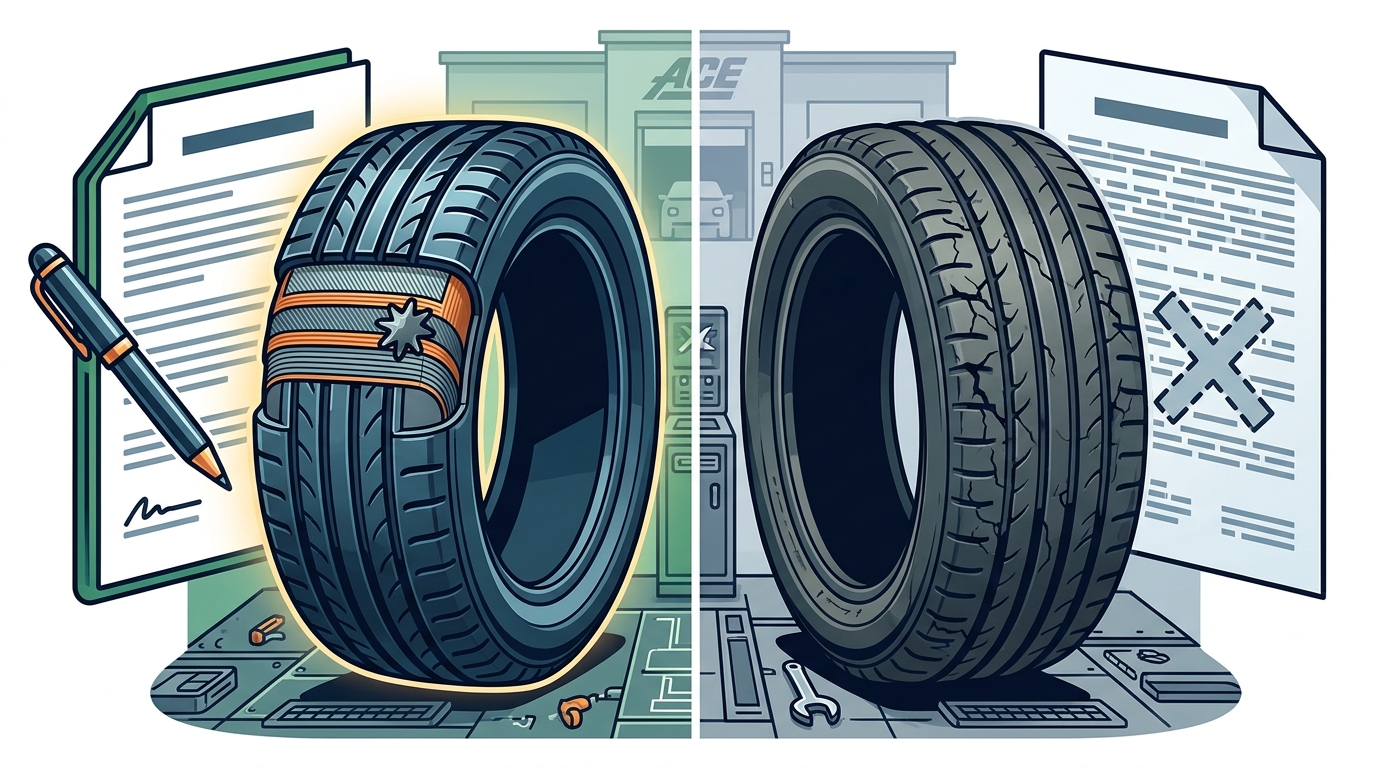
Key Takeaways
- Prorated coverage means the refund amount decreases as the tire wears down.
- Road hazards and improper maintenance are the most common reasons for claim denial.
- Keep your original receipt and proof of purchase in a safe place.
- Regular maintenance, such as rotations and alignments, is often required to keep the warranty valid.
- Check the specific mileage and time limits for your tire model.
Frequently Asked Questions
Does a tire warranty cover normal wear and tear?
No, tire warranties do not cover normal wear and tear. They only cover manufacturing defects. Normal wear is an expected part of using a tire and is not considered a defect.
What happens if I lose my receipt?
If you lose your receipt, the manufacturer may use the date code on the tire sidewall to estimate the purchase date. However, this often results in a lower reimbursement amount because the tire is assumed to be older.
Do I need to buy tires from a specific dealer to get warranty coverage?
Generally, no. Most tire warranties are valid regardless of where you buy the tires, as long as you have proof of purchase. However, some promotional warranties may require purchase from authorized dealers.
Can I transfer a tire warranty to a new owner?
Yes, most tire warranties are transferable to a new owner. You should provide the new owner with the original receipt and any warranty documentation to ensure they can file a claim if needed.
How long does it take to process a tire warranty claim?
Processing times vary by manufacturer, but it typically takes two to four weeks. Some claims may take longer if the manufacturer needs to inspect the tire in person.
Conclusion
Understanding tire warranty coverage is essential for making an informed purchase. By knowing the difference between limited and full warranties, you can avoid unexpected costs. At Ace Auto Repair & Tire Pros, we are committed to helping you navigate these details with confidence. Our team in San Ramon provides honest advice and quality service to ensure your vehicle remains safe and efficient. To discuss your tire options and warranty details, contact us today. Learn more: Contact Ace Auto Repair.