

How to Choose a Tire Rotation Service
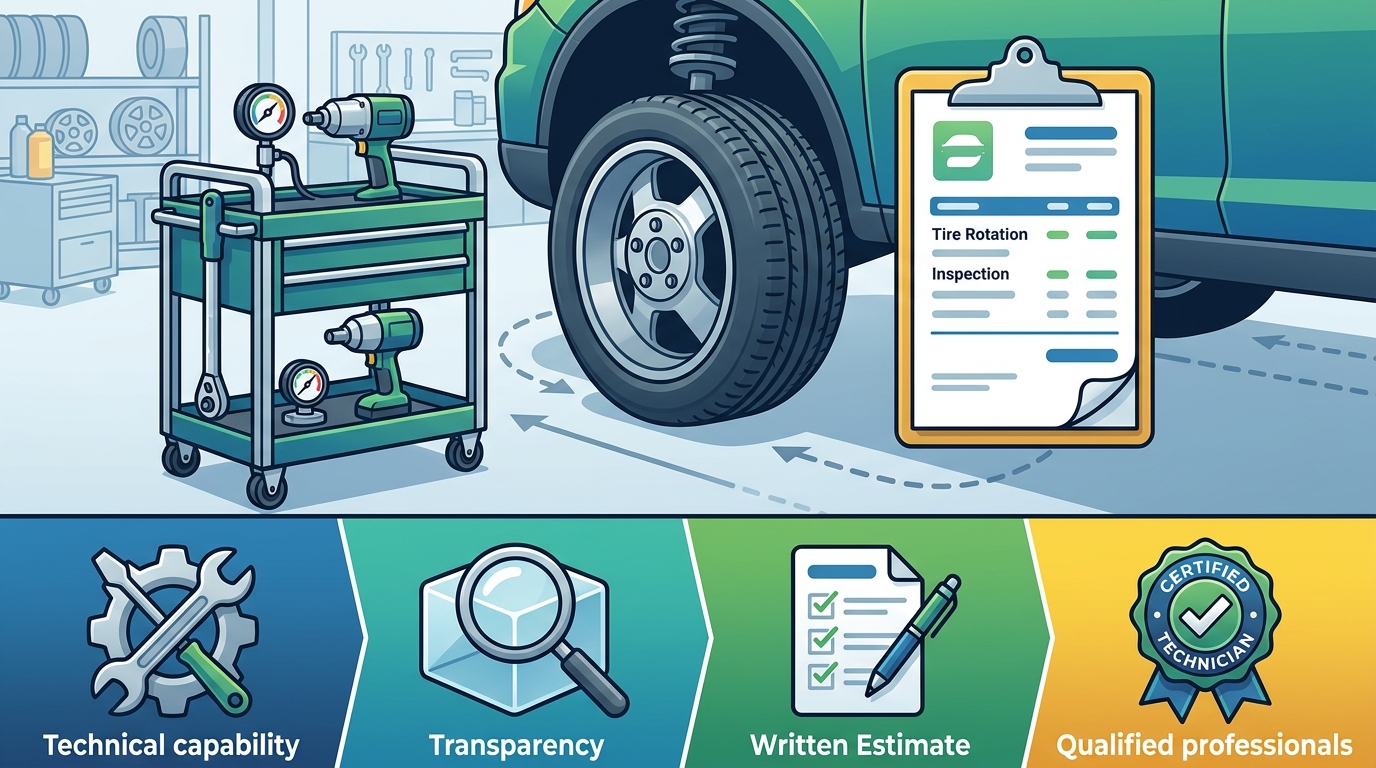
Choosing the right shop depends on technical capability and transparency. A good provider clearly states their pricing model and uses certified technicians. Look for shops that offer a written estimate before starting work. This prevents surprise charges. Ace Auto Repair & Tire Pros in San Ramon, CA, serves as a model for this transparency, offering clear service menus for tire installation and related services. While located in the Bay Area, their approach to clear communication is applicable to Phoenix drivers seeking reliable service.
Certification and Experience
ASE (Automotive Service Excellence) certification is a key indicator of technician skill. Ask if your technicians hold current ASE certifications. Experience with specific tire types, such as run-flat or all-terrain, is also important. A shop that specializes in your vehicle type will likely provide better service.
Reputation and Reviews
Check recent online reviews for mentions of pricing accuracy and customer service. Look for patterns in feedback. Consistent praise for honesty is a strong signal. Avoid shops with numerous complaints about hidden fees or upselling.
What to Ask Before Committing
Ask specific questions to ensure you understand the service. Inquire about the total cost including labor and parts. Ask if the price includes a wheel alignment check. Clarify if the rotation pattern is specific to your vehicle. These questions help you compare options effectively.
Price and Inclusions
Ask: "What is the total price for a tire rotation?" and "Does this include a wheel balance?" Some shops charge extra for balancing. Others include it. Knowing this upfront prevents budget overruns.
Warranty and Guarantees
Ask about the warranty on the service. Most reputable shops offer a 90-day to 1-year warranty on labor. This protects you if the issue persists. Ask for the warranty terms in writing.
How to Verify Credentials
Verify that the shop and technicians are legitimate. Check the shop's license and insurance. You can verify ASE certifications through the ASE website. This ensures the technicians are qualified. Do not rely solely on marketing claims.
License and Insurance
Ask for the shop's business license and liability insurance. A legitimate shop will provide these documents upon request. This protects you in case of damage to your vehicle.
ASE Certification
ASE certification is a voluntary credential. Technicians must pass exams to earn it. You can verify a technician's certification by searching their name on the ASE website. This is a reliable way to check their qualifications.
How the Process Works
A tire rotation involves moving tires from one position to another. The process typically takes 30 to 60 minutes. The technician removes the wheels, rotates them according to the manufacturer's pattern, and reinstalls them. They may also check tire pressure and balance.
Step-by-Step Process
First, the technician inspects the tires for wear. Then, they remove the wheels. The tires are rotated to new positions. Finally, the wheels are reinstalled and torqued to specification. The technician may perform a quick balance check.
Time Required
Most rotations take less than an hour. If a wheel balance is included, it may take longer. Ask the shop for an estimated completion time. This helps you plan your day.
What Drives the Cost
The cost of a tire rotation varies based on several factors. The type of vehicle is a major factor. Larger vehicles like SUVs and trucks cost more to rotate. The complexity of the wheel design also affects price. Alloy wheels may cost more than steel wheels. according to Waste Tire Fee
Vehicle Type
Additional Services
Common Mistakes to Avoid
One common mistake is ignoring the manufacturer's recommended rotation interval. This leads to uneven tire wear. Another mistake is not checking tire pressure after rotation. Low pressure can cause premature wear. Always check your tire pressure after service.
Ignoring Wear Patterns
If you notice uneven wear, do not ignore it. Uneven wear can indicate alignment issues or suspension problems. A rotation alone may not fix these issues. Have a professional inspect your vehicle.
Skipping the Balance
Skipping a wheel balance can cause vibration. Vibration affects ride comfort and tire life. If you feel vibration, ask for a balance. It is a small cost for a significant improvement.
Tire Rotation vs. Alternatives
Tire rotation is a preventive maintenance service. It is different from a wheel alignment. An alignment adjusts the angles of the wheels. A rotation moves the tires. Both are important for tire life. A rotation is less expensive than an alignment.
Rotation vs. Alignment
Rotation vs. New Tires
Costs for Specific Vehicle Types
Costs vary by vehicle type. Electric vehicles (EVs) may have different rotation needs. EVs are heavier, which can cause faster tire wear. Hybrid vehicles may have specific rotation patterns. Ask your shop about your specific vehicle.
Electric Vehicles
EVs are heavier than comparable gas vehicles. This weight can cause uneven tire wear. Regular rotations are essential for EV owners. Some EV manufacturers recommend more frequent rotations. Check your owner's manual.
Off-Road Vehicles
Off-road vehicles use all-terrain tires. These tires may have specific rotation patterns. Some all-terrain tires are directional. Directional tires can only be rotated front-to-back. This limits the rotation options. Ask your shop if they can rotate your specific tires.
Consumer Protections and Rules
Consumers have rights when purchasing auto services. You have the right to a written estimate. You have the right to know the total cost before work begins. You have the right to a warranty on labor. These protections are enforced by state consumer protection laws. according to 59 1 207
Right to an Estimate
Ask for a written estimate before authorizing work. This estimate should include labor and parts. If the final cost exceeds the estimate, the shop should notify you. This protects you from unexpected charges. according to 59 1 207
Warranty Rights
Most shops offer a warranty on labor. This warranty covers the service for a specific period. If the issue persists, the shop should fix it for free. Keep your receipt and warranty information.
Phoenix Local Specifics
Phoenix's climate affects tire wear. High temperatures can cause tire pressure to fluctuate. This can lead to uneven wear. Regular rotations help mitigate this. Phoenix drivers should check tire pressure more frequently. The heat can also degrade tire rubber faster.
Climate Impact
Phoenix experiences extreme heat in summer. This heat can cause tire pressure to rise. High pressure can lead to center wear. Low pressure can lead to edge wear. Regular rotations help distribute wear evenly. Check your tire pressure monthly.
Local Pricing
Pricing in Phoenix may vary by neighborhood. Urban areas may have higher prices than suburban areas. Labor costs are a major factor. Ask local shops for quotes. Compare prices to find the best value.
When to Schedule a Rotation
Timing is crucial for tire life. Rotate your tires every 5,000 to 7,500 miles. This is the manufacturer's recommended interval. Rotate them at the same time as your oil change. This makes it easy to remember. Do not wait until you notice wear.
Mileage-Based Timing
Most manufacturers recommend rotating tires every 5,000 to 7,500 miles. This interval ensures even wear. If you drive more, rotate more frequently. If you drive less, rotate less frequently. Use your odometer to track mileage.
Time-Based Timing
If you do not drive much, rotate your tires every 6 months. Tires can develop flat spots if they sit in one position for too long. Regular rotations prevent this. This is important for vehicles that are not driven daily.
Long-Term Results
Regular rotations extend tire life. This saves you money. It also improves safety. Evenly worn tires provide better traction. This is especially important in wet conditions. Regular rotations are a simple way to improve your vehicle's performance.
Extended Tire Life
Rotating tires every 5,000 miles can add 5,000 to 10,000 miles to their life. This is a significant extension. It means you get more value from your tires. This is a direct financial benefit.
Improved Safety
Evenly worn tires provide better grip. This improves braking and handling. This is especially important in emergency situations. Regular rotations are a safety investment. They help you avoid accidents.
Key Takeaways
- Choose a shop with certified technicians and clear pricing.
- Ask about inclusions like wheel balancing and warranties.
- Verify ASE certifications and business licenses.
- Rotate tires every 5,000 to 7,500 miles.
- Phoenix's heat can affect tire pressure and wear.
- Regular rotations extend tire life and improve safety.
- Keep records of all services for warranty claims.
Frequently Asked Questions
How much does a tire rotation cost in Phoenix?
How often should I rotate my tires?
Rotate your tires every 5,000 to 7,500 miles. Check your owner's manual for specific recommendations.
Does a tire rotation include a wheel balance?
Not always. Some shops include a balance, while others charge extra. Ask the shop before booking.
What is the difference between a rotation and an alignment?
A rotation moves tires to new positions. An alignment adjusts wheel angles. Both are important for tire life.
How long does a tire rotation take?
A rotation typically takes 30 to 60 minutes. If a balance is included, it may take longer.
Do electric vehicles need tire rotations?
Yes. EVs are heavier, which can cause faster tire wear. Regular rotations are essential for EV owners.
What is ASE certification?
ASE certification is a credential for automotive technicians. It indicates that the technician has passed exams and is qualified.
How can I verify a shop's credentials?
Check the shop's business license and insurance. Verify ASE certifications through the ASE website.